Poor attribution and reporting
Reporting that tells you what to change, not just what happened
Maestra Platform ties every number to the program behind it, the all-in-one retention marketing platform for ecommerce brands, with a forward-deployed marketer acting on it.
Brands running on Maestra






The problem
Paid spend keeps climbing, returns keep shrinking
When attribution is unclear, ad budgets get defended on faith instead of evidence. Teams cannot tell if Meta or email actually drove the order, so spend keeps rising while first-order profitability slips further away.
What we hear from brands
a bartending tools brand whose Instagram traffic attribution is unclear while paid Meta ads cannot reach first-order profitability
a DTC brand over-reliant on Meta ads watching returns decrease as attribution stays inaccurate
a skincare brand heavily dependent on ads with a fragmented stack driving the same attribution issues
The new way
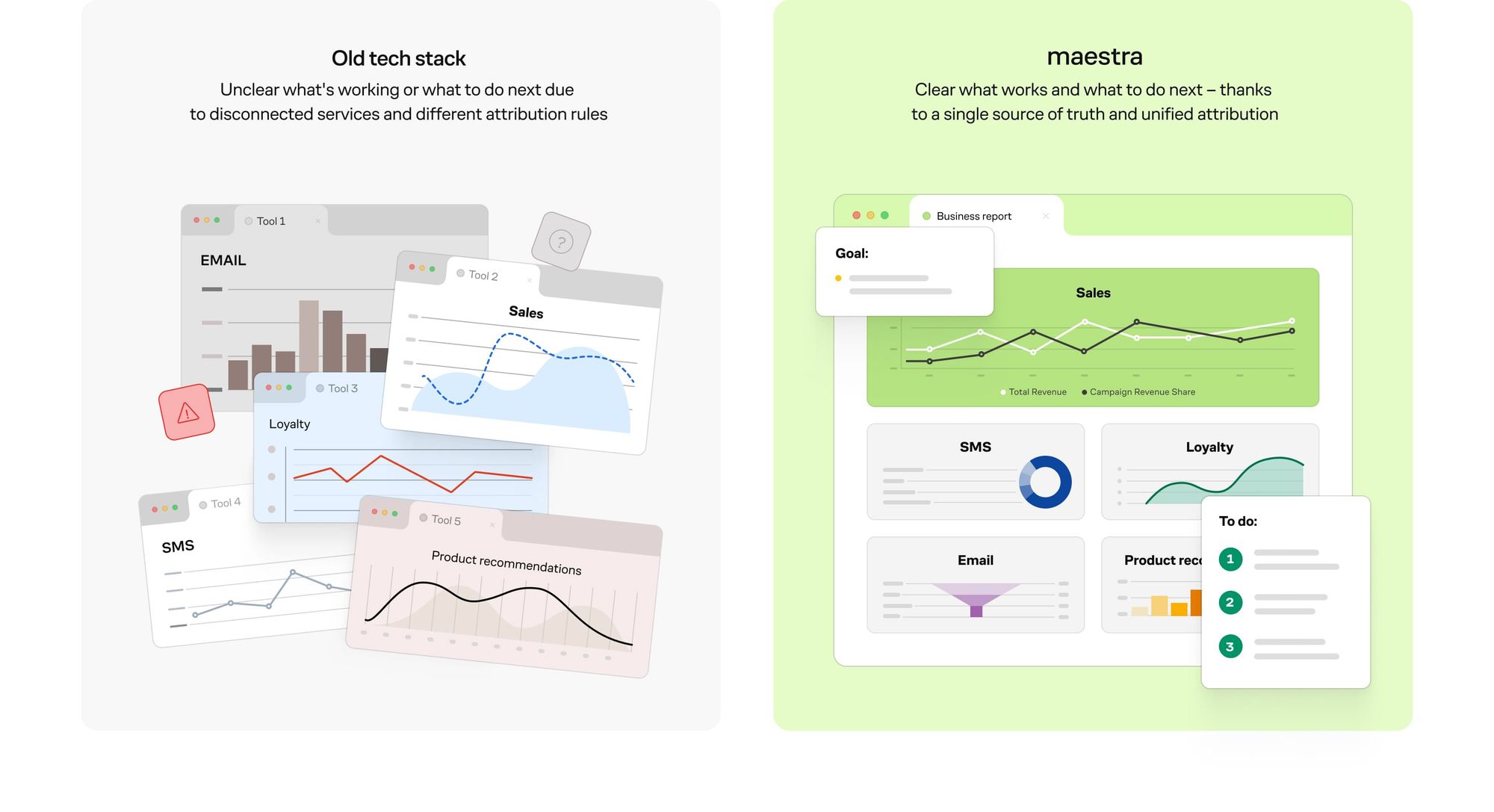
One attribution model, fully transparent
Maestra uses last-non-direct-touch attribution to link every campaign, flow, and channel to revenue, and every attributed order can be verified. Teams can adjust attribution windows or exclude transactional messages so the model matches how the business actually works.
Outcomes brands report
64%
reduction in marketing stack costs
8.9%
campaign-driven revenue increase
22%
repeat domestic revenue growth
Customer proof
Furniture Fair found the deliverability problem in its own reporting

Open rates at seventeen percent looked like a content problem until the data showed where the messages were landing. Fixing the cause rather than the symptom more than doubled the click rate.
 Read the full case study
1.02% → 2.74%
click rate after the deliverability fix
How it works
No IT project on your side
Nothing to install
Your developers are not part of this. Setup and day-to-day operation need no engineering support.
Your marketer does the building
Segments, flows, personalization rules, and A/B tests are their work, not a backlog item for someone on your team.
You review, they ship
Keeping up with approvals is the biggest job left on your side once the plan is agreed.
The platform
Speed is a feature of the data model
Personalization only works if it answers before the page does. The platform handles 2M requests per minute with responses under 300 milliseconds, which is what lets a widget react inside the visit rather than after it.
Your forward-deployed marketer
Lessons from hundreds of brands, applied to yours
Your marketer has run this migration and these flows for ecommerce brands before, so the first version of a program starts from what already works elsewhere rather than from a blank canvas.
Patterns taken from hundreds of implementations
Ecommerce-specific expertise, not general martech
Faster results because the first draft is not guesswork
Replace your stack
Agency plus point tools, priced honestly
The common setup is several subscriptions and a retainer for the people who operate them. Here the operating is included, which changes what the comparison is actually between.
The next step is smaller than a migration
Look at the platform, ask what your first month would look like, and decide after that.